Print has always had one big advantage: it gets noticed. A well-designed mailer, flyer, poster, or leave-behind puts a message directly into someone’s hands in a way that digital ads often cannot. It feels tangible, credible, and intentional.
But print has also had a limitation. Once someone reads the piece, the interaction usually stops there. That is starting to change.
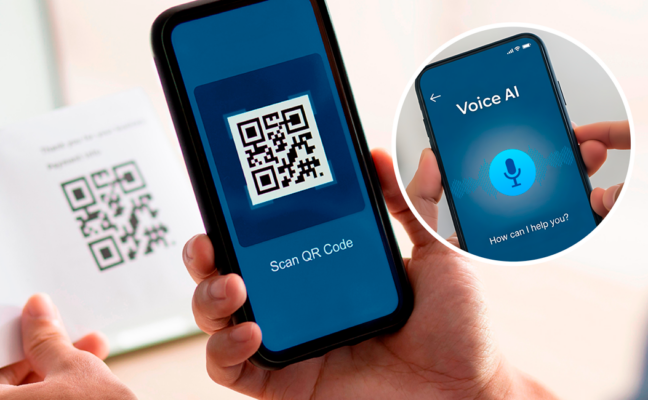
With VoiceAI-enabled print, organizations can turn a printed piece into the beginning of a conversation. By adding a QR code that leads to a branded microsite with an AI chatbot, print becomes more than a static communication tool. It becomes an interactive experience that can explain an offer, answer questions, and help guide someone to the next step in real time.
For organizations looking to get more value from direct mail, event marketing, student recruiting, fundraising, real estate, or B2B sales materials, this creates a new way to connect print and digital in a way that feels both useful and timely.
What Is VoiceAI-Enabled Print?
At its core, VoiceAI-enabled print is a simple idea with a lot of potential. A printed piece includes a QR code. When someone scans it, they are taken to a microsite built specifically for that campaign, organization, or audience. On that microsite, an AI chatbot can engage the visitor in conversation, provide helpful information, and answer questions based on what the user wants to know.
That matters because most printed pieces are limited by space. A postcard can only say so much. A brochure cannot answer follow-up questions. A poster may capture interest, but it cannot adapt to the person reading it.
When print is connected to an AI chatbot microsite, those limitations start to disappear. The printed piece still does the important job of capturing attention, but now it can also lead to a more personalized digital experience.
Why This Approach Works
What makes this technology compelling is not just the AI. It is the combination of print, timing, and interaction.
When someone scans a QR code from a printed piece, they are already showing interest. That moment matters. They are curious enough to take action, and they want information right then. If the experience that follows is helpful, clear, and easy to use, the printed piece becomes much more valuable.
Instead of leaving people to search through a website or wait for someone to follow up, a VoiceAI experience can meet them where they are. It can answer questions about a product, explain a service, provide event details, introduce an organization, or help someone understand next steps without adding friction.
That makes print more useful for the audience and more strategic for the organization behind it.
The Value of Personalized QR Codes
One of the most valuable parts of this program is the ability to use personalized QR codes. That is an important distinction because it makes the experience more than a generic microsite journey.
When a personalized QR code is tied to an individual recipient or a specific audience segment, organizations gain a clearer picture of who engaged, what they interacted with, and how they responded. That makes tracking, attribution, and follow-up much more meaningful. Instead of simply knowing that traffic reached a microsite, teams can better understand engagement at the recipient or segment level.
This can be especially valuable in direct mail, fundraising, recruiting, event outreach, and B2B campaigns where response tracking and next-step follow-up matter.
The program can also work without personalized QR codes. A standard QR code can still direct users to a VoiceAI microsite where they can ask questions and explore information in real time. The difference is in the depth of reporting. Without personalization, organizations can still measure overall activity and engagement trends, but the tracking is less precise and less detailed.
How VoiceAI and Print Improve Customer Engagement
First, it makes communication more immediate. People do not want to wait for answers if they are interested now. Whether someone is considering a school, evaluating a vendor, thinking about a donation, or trying to learn more at a trade show, speed matters.
Second, it makes communication more relevant. Instead of forcing every reader through the same static message, an AI chatbot lets people explore the topics that matter most to them. One person may want a quick overview. Another may want details. Another may be ready to take action. A conversational microsite supports all three.
Third, it extends the value of the printed piece itself. A mailer, poster, brochure, or event handout no longer has to do all the work alone. It becomes the starting point for a deeper, more responsive digital interaction.
And when personalized QR codes are part of the program, that interaction can be connected back to an individual recipient or audience segment, giving organizations stronger insight into what is working and where engagement is happening.
This is where print marketing with QR codes becomes much more than a trend. It becomes a smarter way to build engagement.
A Real Example: 2026 Calendar Microsite
Think Patented has already put this concept into action with its calendar application. Instead of functioning as only a printed calendar, the piece becomes a gateway to an interactive digital experience. By scanning the QR code, users can visit a microsite, engage with AI, and learn more beyond what appears on the printed piece itself. That turns the calendar into something more dynamic, more informative, and more connected.
This is a strong example because it shows that VoiceAI-enabled print is not limited to traditional direct mail or promotional campaigns. Even a familiar printed format can become an entry point to a more engaging customer experience.
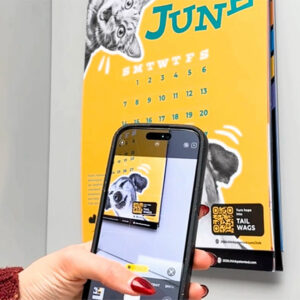
See how VoiceAI brings print to life. Watch our demo video to experience how our calendar became an interactive digital engagement tool.
Watch the Demo: VoiceAI-Enabled Print Demo | Interactive Calendar Experience
Who Should Consider VoiceAI-Enabled Print?
One of the biggest advantages of this technology is how flexible it is. It can work across industries and campaign types because the core value stays the same: print captures attention, and AI helps continue the conversation.
Higher Education Institutions
Higher education is a strong fit because prospective students and families often have questions, and they expect answers quickly. A printed recruiting piece can lead to a microsite where users can ask about programs, admissions, student life, financial aid, or next steps.
That creates a more responsive experience while helping institutions deliver more personalized communication at scale.
Direct Mail Marketers
Direct mail is still one of the most effective channels for standing out, but it works even better when it creates a clear next step. Adding a QR code and AI chatbot gives recipients a way to engage immediately instead of setting the piece aside for later.
For marketers, that means direct mail can become more interactive, more measurable, and more aligned with how people actually want to respond.
Real Estate Professionals
Real estate marketing often depends on timing and follow-up. A printed flyer, postcard, or property sign can generate interest, but questions usually come next. A VoiceAI-powered microsite gives prospects a way to ask about the property, neighborhood, amenities, or next steps even when an agent is not immediately available.
That helps keep momentum going at the moment of interest.
Event and Trade Show Marketers
Events and trade shows are another strong use case because attendees are constantly scanning, browsing, and trying to gather information quickly. Posters, booth signage, handouts, and displays can all direct visitors to a microsite where they can learn more about products, schedules, services, or follow-up options.
This is especially helpful in busy event environments where staff may not be able to talk with everyone at once.
Nonprofit Fundraising and Donor Engagement
For nonprofits, printed fundraising materials can do more than tell a story. They can invite supporters into a conversation. A campaign mailer, event piece, or donor handout can lead to a microsite where people can ask questions about mission impact, programs, volunteer opportunities, or ways to give.
That makes nonprofit communication feel more personal and more accessible.
Manufacturing and B2B Sales
Manufacturing and B2B organizations often need to explain complex offerings in a clear, efficient way. Printed brochures, spec sheets, leave-behinds, and trade show materials can lead prospects to an AI chatbot that answers questions about capabilities, applications, timelines, certifications, or services.
In longer sales cycles, that kind of immediate access to information can be especially valuable.
Why This Matters Across Industries
No matter the audience, the communication challenge is often the same. People want faster answers, more relevant information, and an easier way to move from interest to action.
That is why VoiceAI-enabled print has such broad potential.
It helps organizations meet modern expectations without abandoning the strengths of print. Instead of treating print and digital as separate channels, this approach connects them. The printed piece creates the first touchpoint, and the microsite continues the experience in a way that feels more helpful and personalized.
It also helps internal teams. Not every organization has the bandwidth to respond immediately to every initial inquiry. An AI-powered microsite can help answer common questions, guide users, and support engagement without putting all of that pressure on staff.
The Future of Print Is More Connected
Print is not going away. In many ways, it is becoming more valuable because people are overwhelmed by digital noise. But the way organizations use print is evolving.
The most effective print strategies are no longer limited to what fits on the page. They create a path to something more. With VoiceAI, QR codes, and a microsite, a printed piece can inform, engage, answer questions, and help move someone forward in their journey.
It means a poster at an event can become a helpful guide. A direct mail piece can become a conversation starter. A donor appeal can become an interactive mission story. A recruiting piece can become a personalized information hub. A B2B brochure can become a more useful sales tool.
Rethinking What Print Can Do
For organizations that want to improve customer engagement, create more personalized experiences, and get more from the printed materials they already use, VoiceAI-enabled print is worth serious attention.
By combining physical materials with an AI chatbot microsite, organizations can create a more connected customer experience, one that meets people with the information they want, when they want it, in a format that feels natural and easy to use.
When print is connected to VoiceAI, it works harder.
Curious about what’s possible? Let’s talk—consultations are always free! Just fill out the form below or give us a call at 937.353.2299.